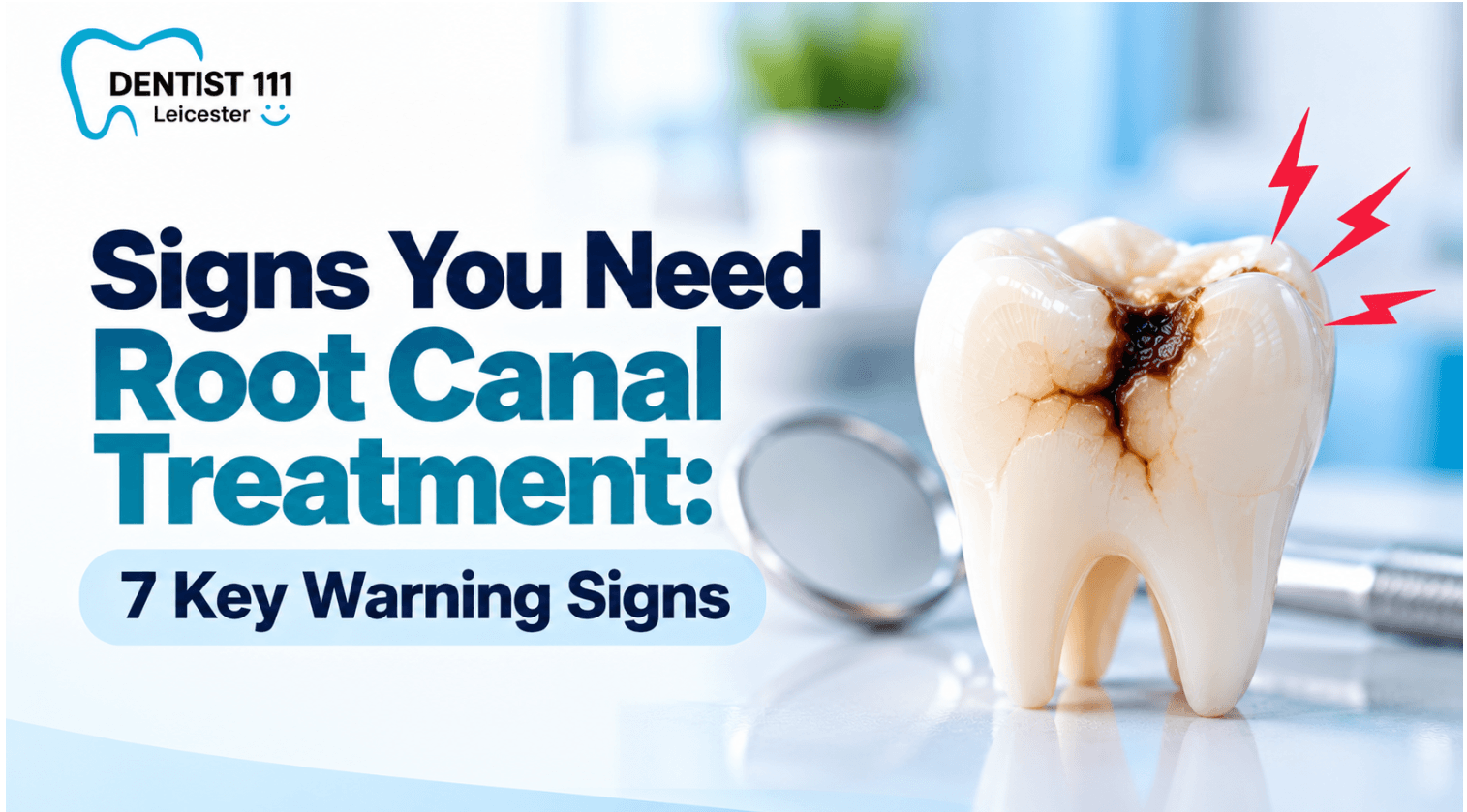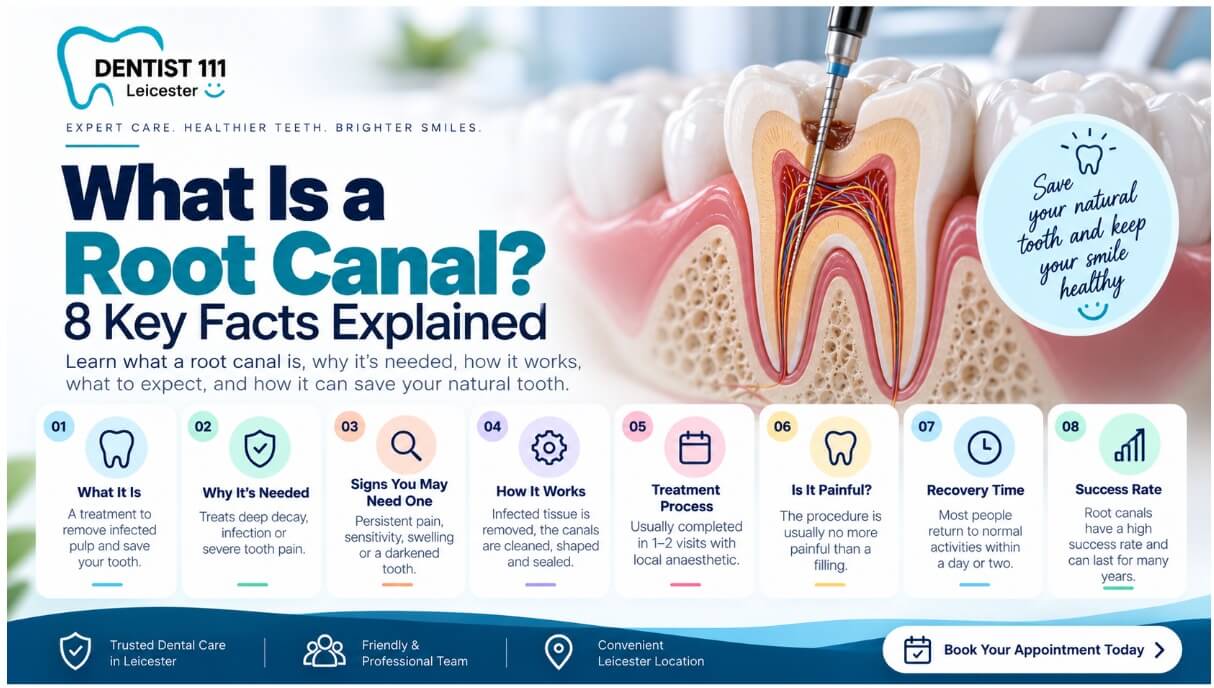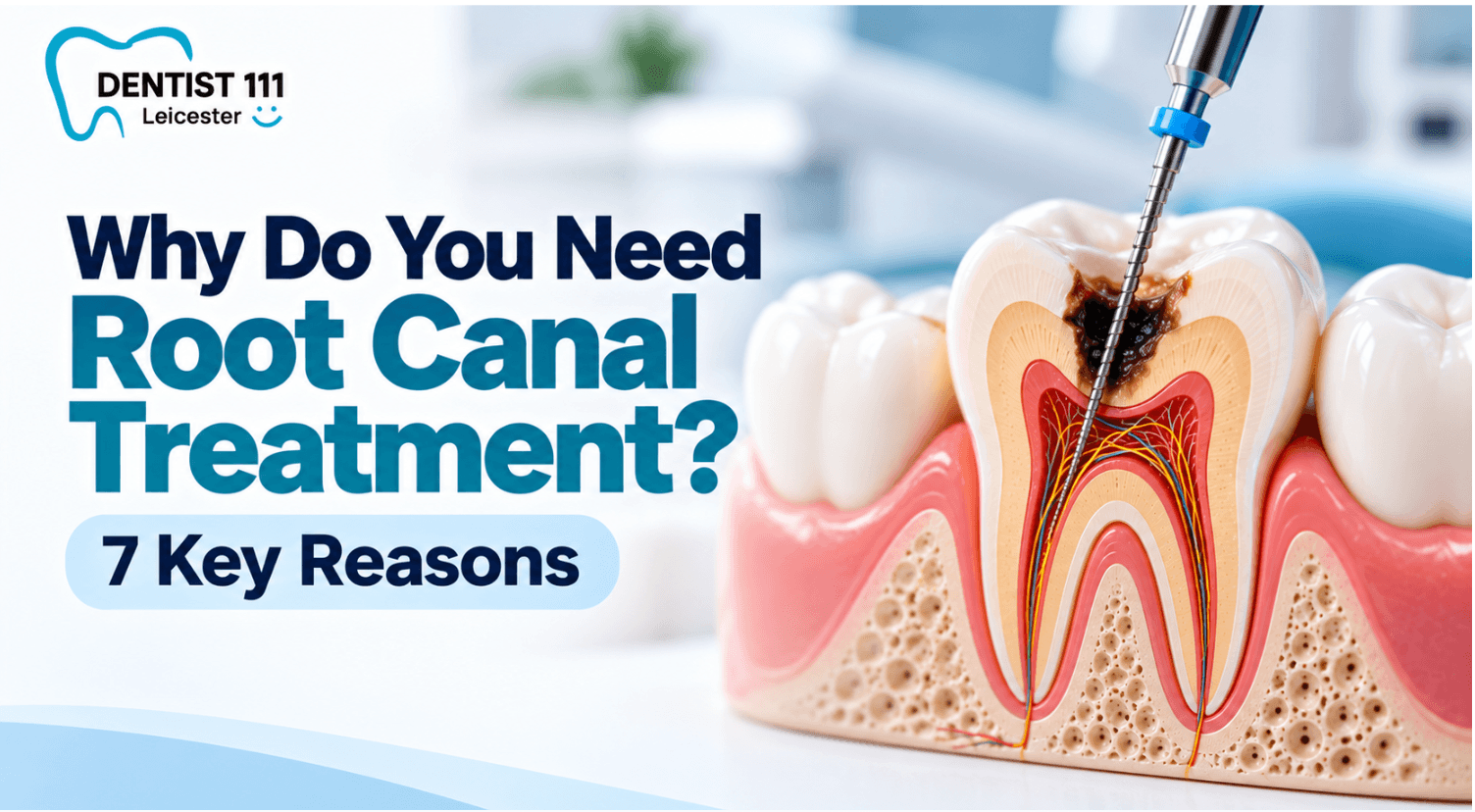
Root canal treatment is used when the dental pulp inside a tooth becomes inflamed, infected, or damaged and can no longer remain healthy. Deep decay, cracks, dental trauma, repeated procedures, and damaged restorations can affect the pulp. Treatment removes the diseased tissue, cleans and seals the root canals, and preserves the natural tooth when possible.
Why Is Root Canal Treatment Needed?
Root canal treatment is needed when the dental pulp becomes inflamed, infected, or damaged and requires endodontic care. When the pulp is significantly affected, treatment removes the diseased tissue and addresses the condition within the root canal system.
What Is the Dental Pulp?
Dental pulp is the soft tissue inside a tooth that contains nerves, blood vessels, and connective tissue. It occupies the pulp chamber and extends through the root canals.
During tooth development, the pulp supports the formation and development of the tooth. Its nerves also transmit sensory signals. Damage to the pulp can trigger inflammation or allow bacterial infection to develop.
What Happens When the Pulp Becomes Damaged?
Damage to the dental pulp can cause inflammation or infection within the tooth. Decay, cracks, trauma, and other forms of tooth damage can compromise the health of the pulp.
The basic disease pathway is:
Tooth damage → pulp inflammation or infection → diseased pulp → root canal treatment
When the pulp becomes irreversibly damaged or infected, root canal treatment removes the affected tissue rather than removing the entire natural tooth.
What Are the Main Reasons a Tooth Needs Root Canal Treatment?
Deep Tooth Decay
Deep tooth decay can lead to root canal treatment when it reaches the dental pulp and causes irreversible inflammation or infection. As decay progresses through the enamel and dentine, it can eventually affect the pulp.
A deep cavity does not automatically mean that root canal treatment is required. The condition of the pulp determines whether the tooth can be treated with a restoration or requires endodontic treatment.
Cracked, Chipped or Broken Tooth
A cracked, chipped, or broken tooth can require root canal treatment when the damage affects the dental pulp or allows bacteria to reach it. The severity and location of the damage determine how the pulp is affected.
When the pulp becomes exposed or compromised, inflammation or infection can develop.
Dental Injury or Trauma
Dental trauma can damage the pulp and lead to root canal treatment even when there is no obvious crack or chip. An impact can injure the internal pulp tissue while leaving the visible tooth structure relatively intact.
Pulp damage can develop after the initial injury, so the condition of the tooth requires clinical assessment.
Repeated Dental Procedures
Repeated dental procedures on the same tooth can contribute to pulp irritation or damage and may eventually require root canal treatment. Previous restorative treatment can affect the pulp, particularly when a tooth has undergone multiple procedures.
Whether endodontic treatment is required depends on the condition of the pulp and the remaining tooth structure.
Faulty or Damaged Dental Restoration
A faulty or damaged restoration can contribute to pulp problems when leakage or loss of the restoration allows bacteria to reach deeper tooth structures. Fillings and crowns that no longer provide an effective seal can expose the underlying tooth to further damage.
The appropriate treatment depends on the condition of the restoration, dental pulp, and remaining natural tooth structure.
How Does Tooth Damage Lead to the Need for a Root Canal?
Tooth damage can lead to root canal treatment when it affects the dental pulp and causes irreversible inflammation or infection. The progression varies according to the type and severity of the damage.
Tooth damage → pulp involvement → inflammation or infection → endodontic treatment
When the pulp can no longer remain healthy, root canal treatment removes the diseased tissue and treats the affected canal system. The remaining natural tooth can be retained and restored when it is suitable for treatment.
Does Every Deep Cavity Need Root Canal Treatment?
No. A deep cavity does not automatically require root canal treatment; the need for endodontic treatment depends on the condition of the dental pulp and the remaining tooth structure.
When Is a Filling Used?
A dental filling restores tooth structure damaged by decay when the dental pulp does not require root canal treatment. It replaces the lost tooth structure and helps restore the tooth's function.
When decay has not caused irreversible pulp damage, adental filling can treat the affected tooth without removing the pulp.
When Is Root Canal Treatment Considered?
Root canal treatment is considered when decay has affected the dental pulp and caused irreversible inflammation, infection, or damage that prevents the pulp from remaining healthy.
The distinction is simple:
- Filling → restores tooth structure affected by decay.
- Root canal treatment → treats diseased or infected dental pulp.
The appropriate treatment depends on the condition of the pulp and the remaining tooth structure.
Can Previous Dental Work Cause the Need for Root Canal Treatment?
Yes. Previous dental procedures or problems with existing restorations can contribute to pulp inflammation or infection. Repeated treatment can irritate the pulp, while a damaged or defective restoration can allow bacteria to reach deeper tooth structures.
Previous dental work does not automatically mean that root canal treatment is required. The condition of the pulp and remaining tooth structure determines whether endodontic treatment is appropriate.
Why Does Root Canal Treatment Help Preserve the Natural Tooth?
Root canal treatment helps preserve the natural tooth by removing diseased pulp while retaining the remaining tooth structure when the tooth is suitable for restoration.
The treatment removes the affected pulp, cleans and disinfects the root canals, and fills and seals the prepared spaces. This allows the remaining natural tooth structure to be retained and restored.
When endodontic treatment is appropriate, patients in Leicester can receiveroot canal treatment to treat diseased pulp while preserving a suitable natural tooth.
Frequently Asked Questions
What Is the Main Reason for Needing a Root Canal?
Deep tooth decay is a common cause of root canal treatment, although cracks, dental trauma, repeated procedures, and damaged restorations can also affect the pulp.
Can a Cracked Tooth Need a Root Canal?
Yes. A cracked tooth can require root canal treatment when the crack affects the dental pulp or allows bacteria to reach it.
Can Repeated Dental Work Cause a Root Canal?
Yes. Repeated procedures can contribute to pulp irritation or damage, although previous dental work does not automatically mean that root canal treatment is required.
Does Every Cavity Need a Root Canal?
No. A cavity can often be treated with a filling when the dental pulp remains healthy enough to avoid endodontic treatment.
Can an Injury Cause the Need for a Root Canal?
Yes. Dental trauma can damage the pulp and lead to root canal treatment, even when there is no obvious crack or chip.
Can Root Canal Treatment Save the Natural Tooth?
Yes. Root canal treatment can preserve a suitable natural tooth by removing diseased pulp while retaining the remaining tooth structure.