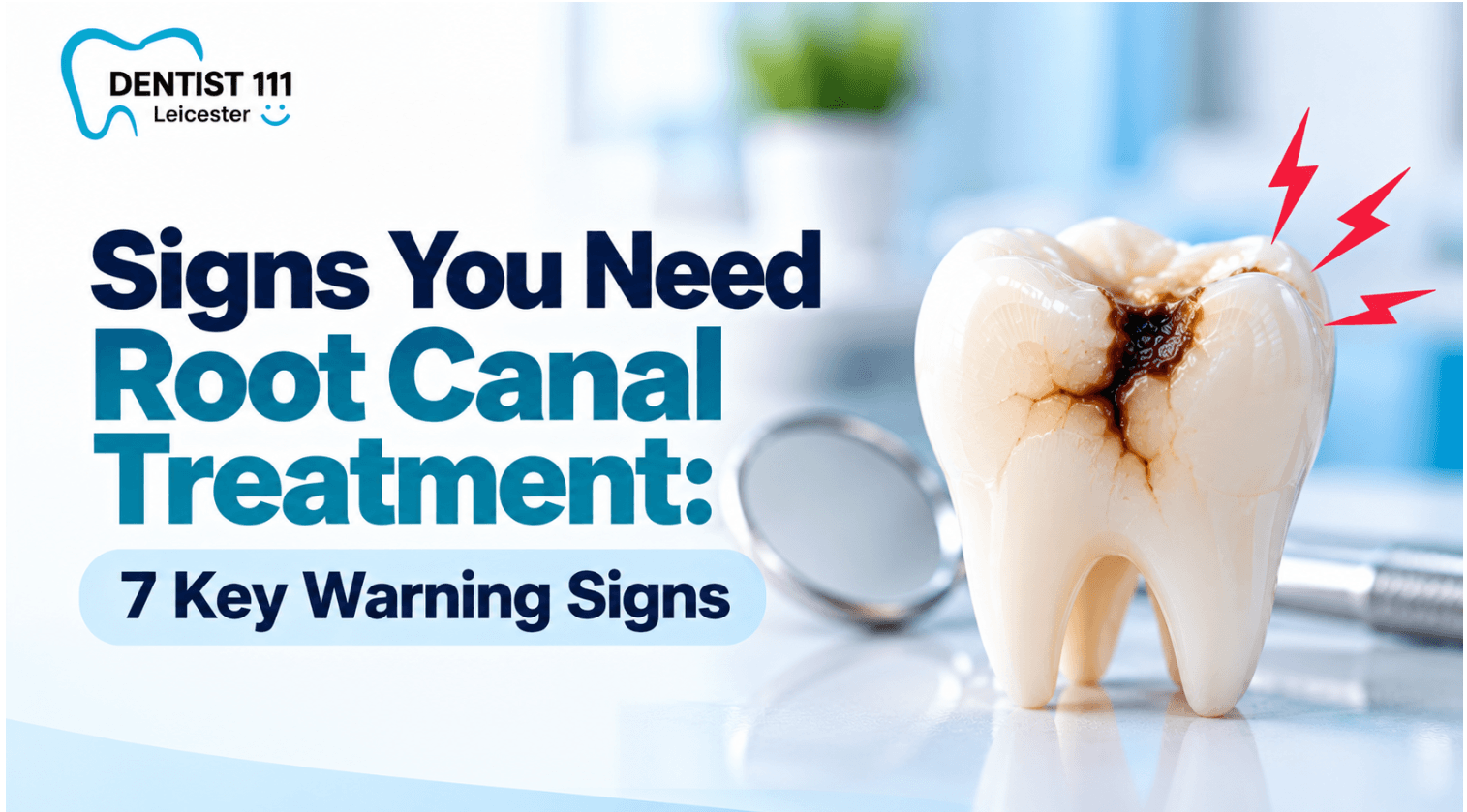
Possible signs that a tooth may need root canal treatment include persistent toothache, lingering sensitivity to hot or cold, pain when biting, swollen gums, pus near a tooth, tooth discolouration, or a cracked tooth. These symptoms may indicate pulp damage or infection, but other dental problems can cause similar signs. A dental assessment is needed to determine the cause.
What Are the 7 Signs You Need Root Canal Treatment?
The seven signs below describe possible symptoms of dental pulp damage or infection. None confirms the need for root canal treatment on its own, because other dental conditions can cause similar symptoms.
These symptoms can indicate problems affecting the dental pulp, but other dental conditions can cause similar signs. They may occur individually or together, and a dental assessment is needed to determine the cause.
1. Persistent or Throbbing Toothache
Persistent or throbbing toothache can indicate inflammation or infection affecting the dental pulp. The pain may continue, return repeatedly, or occur without an obvious trigger.
You may notice:
- Deep, throbbing pain in a particular tooth.
- Toothache that repeatedly returns.
- Pain that interferes with eating or sleeping.
Persistent toothache warrants dental assessment, particularly when the pain is severe or worsening. Although pulp disease is one possible cause, tooth decay, cracks, and other dental problems can produce similar pain.
2. Sensitivity to Hot or Cold That Lingers
Lingering sensitivity to hot or cold food and drinks can indicate irritation or damage affecting the dental pulp. Unlike brief sensitivity, the discomfort continues after the temperature stimulus has been removed.
You may notice:
- Pain after drinking hot tea or coffee.
- Sensitivity to cold drinks or food that takes time to settle.
- Discomfort that repeatedly returns when the tooth encounters temperature changes.
Brief sensitivity can occur for several reasons, including exposed dentine or tooth decay. Lingering pain may indicate a deeper problem, but its duration alone cannot confirm pulp damage or establish the need for root canal treatment.
If temperature sensitivity persists or worsens, arrange a dental assessment to identify the underlying cause.
3. Pain When Biting or Chewing
Pain when biting or chewing can indicate a problem affecting the tooth structure, dental pulp, or surrounding tissues. The discomfort may occur when pressure is applied to one particular tooth.
You may notice:
- Pain when biting into firm foods.
- Discomfort when chewing on one side of the mouth.
- Tenderness when pressure is applied to a specific tooth.
Tooth decay, a cracked tooth, inflammation around the root, and pulp problems can cause similar symptoms. Pain when biting does not automatically mean you need root canal treatment.
If the discomfort persists or worsens, arrange a dental assessment to identify the cause and determine the appropriate treatment.
4. Swollen or Tender Gums Near a Tooth
Swollen or tender gums near a tooth can indicate inflammation or an infection around the tooth or its root. The affected area may feel sore, look red, or become swollen.
You may notice:
- Swelling around one particular tooth.
- Tenderness when touching the gum.
- A swollen area alongside persistent toothache.
- Discomfort or pressure near the affected tooth.
Gum swelling can have several causes, including gum disease and a dental abscess. When swelling occurs alongside toothache, arrange a prompt dental assessment to identify the cause and determine whether root canal treatment is appropriate.
Swelling that spreads to the face or neck, or causes difficulty breathing or swallowing, requires emergency medical care.
5. A Gum Pimple, Pus or an Unpleasant Taste
A small pimple-like bump on the gum, pus near a tooth, or an unpleasant taste in the mouth can indicate a dental abscess. An abscess develops when bacteria cause an infection, sometimes involving the tissues around a tooth’s root.
You may notice:
- A small, raised bump on the gum near a tooth.
- Pus or fluid draining from the affected area.
- An unpleasant taste or bad breath.
- Gum tenderness or swelling around the tooth.
An abscess can sometimes drain through the gum, reducing pressure or pain without eliminating the underlying infection. The tooth may need root canal treatment if the dental pulp is infected and the tooth can be saved.
Do not squeeze or attempt to drain the gum bump yourself. Arrange a prompt dental assessment, even if the pain has eased.
6. A Tooth Becoming Darker Than Surrounding Teeth
A tooth that becomes grey, brown, or noticeably darker than surrounding teeth may indicate damage to the dental pulp, particularly after an injury. Changes in tooth colour can occur when the tissues inside the tooth are damaged.
You may notice:
- One tooth becoming darker than neighbouring teeth.
- A grey or brown discolouration developing over time.
- A colour change following a knock or injury to the tooth.
Tooth discolouration can have other causes, including staining. However, a tooth that darkens after an injury should be assessed by a dentist, even if it does not hurt.
A darker tooth does not automatically mean you need root canal treatment. The dentist must assess the tooth to determine the cause of the colour change and whether treatment is necessary.
7. A Cracked, Chipped or Broken Tooth
A cracked, chipped, or broken tooth may need root canal treatment if the damage extends into the dental pulp and causes inflammation or infection. The treatment required depends on the depth and extent of the damage.
You may notice:
- Pain when biting or chewing.
- Sensitivity to hot or cold food and drinks.
- A visible crack, chip, or broken section of the tooth.
- Toothache that develops after an injury.
Small chips may only require smoothing or a filling, while more extensive damage may need a crown or other treatment. If the crack affects the dental pulp, root canal treatment may be necessary to help preserve the tooth.
Not every cracked or chipped tooth needs a root canal. Arrange a dental assessment if you notice damage, pain, or new sensitivity, particularly after an injury.
Can You Need Root Canal Treatment Without Toothache?
Yes. Pulp damage or a dental infection can sometimes occur without noticeable toothache. A tooth may become darker after an injury, or a gum abscess may develop with limited pain.
The absence of pain does not rule out a dental problem. Arrange a dental assessment if a tooth changes colour, a gum bump develops, or swelling appears near a tooth. A dentist can determine whether root canal treatment or another treatment is appropriate.
Do These Signs Always Mean You Need Root Canal Treatment?
No, these signs do not always mean you need root canal treatment. Toothache, lingering sensitivity, pain when biting, and gum swelling can have several causes, including tooth decay, cracks, and gum disease.
The appropriate treatment depends on the underlying problem. A filling may be sufficient for some cases of decay, while damage or infection affecting the dental pulp may require root canal treatment.
A dentist needs to assess the tooth before recommending treatment. Do not rely on symptoms alone to decide whether a root canal is necessary, particularly if the pain has stopped but swelling or other changes remain.
When Should You Seek Urgent Dental Care?
Seek urgent dental care if you have severe or persistent toothache, a suspected dental abscess, pus around a tooth, or increasing gum swelling. These symptoms may indicate an infection that requires prompt assessment.
Contact a dentist promptly if you notice:
- Severe or worsening toothache.
- Swelling or tenderness around a tooth.
- Pus, a gum pimple, or an unpleasant taste.
- Pain that returns repeatedly or interferes with sleep.
Do not wait for severe pain to develop before seeking care. A dental infection can cause few noticeable symptoms, and reduced pain does not necessarily mean the underlying infection has resolved.
Seek emergency medical care immediately if you have difficulty breathing or swallowing, or significant swelling involving the face or neck. These symptoms may indicate a serious infection.
For urgent assessment of dental pain or swelling in Leicester, contact anemergency dentist in Leicester to discuss your symptoms and arrange appropriate care.
Frequently Asked Questions
What Are the First Signs of Needing a Root Canal?
Early signs may include persistent toothache, lingering sensitivity to hot or cold, and pain when biting. However, some teeth with pulp damage cause no noticeable symptoms. A dental assessment is needed to determine the cause.
Can a Tooth Need a Root Canal If It Does Not Hurt?
Yes. Pulp damage or infection can sometimes develop without toothache. A change in tooth colour or swelling near the affected tooth may indicate a problem, even when pain is absent.
Does Sensitivity to Cold Mean You Need a Root Canal?
No. Cold sensitivity can result from exposed dentine, tooth decay, or other dental problems. Lingering or worsening sensitivity needs assessment, but sensitivity alone does not confirm that root canal treatment is necessary.
Can a Dental Abscess Be Present Without Severe Pain?
Yes. A dental abscess may cause mild pain or drain through the gum, reducing pressure. However, drainage does not necessarily clear the infection. Seek prompt dental care if you suspect an abscess.
Can a Cracked Tooth Need Root Canal Treatment?
Yes. A cracked tooth may need root canal treatment if the damage affects the dental pulp and causes inflammation or infection. Minor cracks may require different treatment, depending on their depth and location.
Can Symptoms Disappear Even When a Tooth Is Infected?
Yes. Pain may decrease if an abscess drains or the pulp tissue inside the tooth dies. This does not necessarily mean the infection has resolved. Arrange a dental assessment if symptoms improve but an infection is suspected.
Get a Dental Assessment for Possible Root Canal Problems
Toothache, lingering sensitivity, gum swelling or a darkened tooth can indicate a dental problem, but symptoms alone cannot confirm whether root canal treatment is necessary. A dental assessment helps identify the cause and determine the appropriate treatment.
Dentist 111 Leicester provides information aboutroot canal treatment in Leicester. Seek urgent dental care if you suspect a dental abscess or develop worsening swelling.