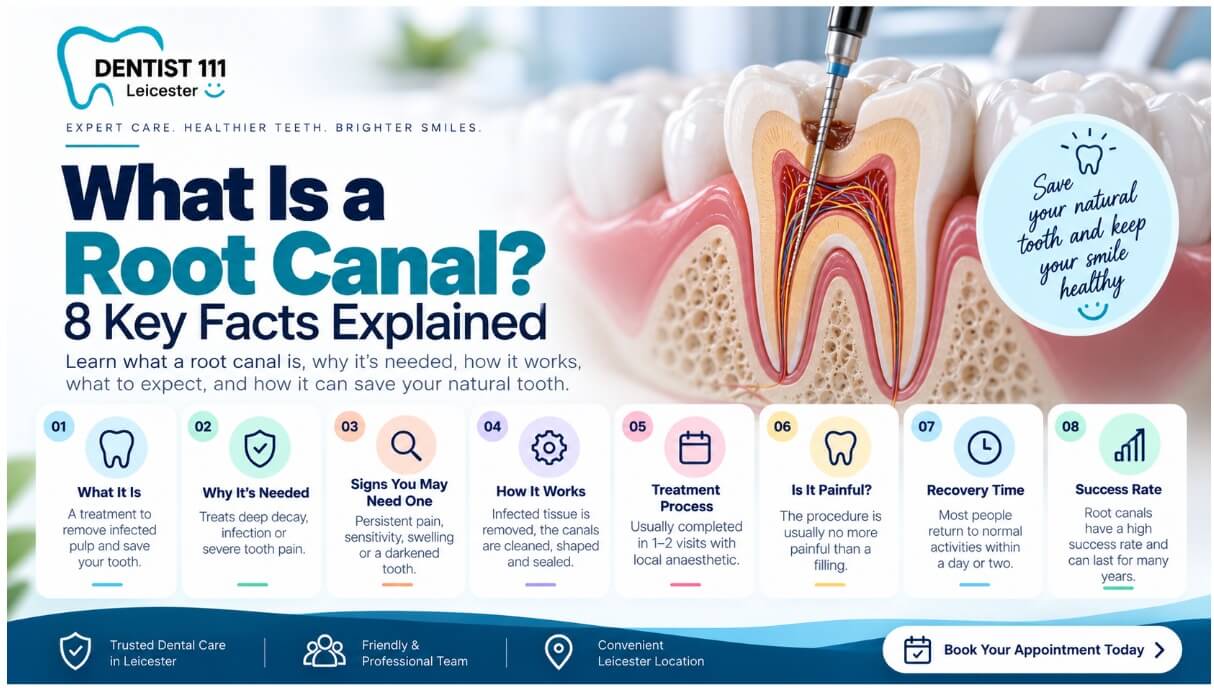
A root canal is the internal passage within a tooth that contains dental pulp, while root canal treatment removes diseased pulp, cleans and disinfects the root canal system, and seals the canals. The treatment addresses inflamed or infected pulp while preserving the natural tooth when sufficient tooth structure remains for restoration.
What Is a Root Canal?
A root canal is the internal canal space inside a tooth that contains dental pulp, while root canal treatment removes diseased pulp and seals the cleaned space. The American Association of Endodontists distinguishes the anatomical root canal from the treatment performed inside it.
What Is Root Canal Treatment?
Root canal treatment is an endodontic procedure that removes inflamed or infected pulp, cleans and disinfects the root canal system, then fills and seals it. The treatment aims to eliminate infection while preserving a suitable natural tooth.
Root canal treatment involves 4 core clinical actions:
- Removing infected or inflamed pulp.
- Cleaning the internal canal system.
- Disinfecting the prepared canals.
- Filling and sealing the canal space.
The treatment is also called endodontic treatment. It addresses disease affecting the dental pulp and tissues surrounding the roots.
What Does “Endodontics” Mean?
Endodontics is the dental specialty focused on the dental pulp and tissues surrounding tooth roots. The American Association of Endodontists defines endodontics around the diagnosis, prevention, and treatment of pulp-related conditions.
The term describes treatment involving the inside of a tooth. Root canal treatment is one type of endodontic treatment. Other endodontic procedures include pulpotomy, endodontic surgery, and treatment of traumatic pulp injuries.
This distinction matters because a root canal is an anatomical structure, while root canal treatment is the procedure performed within that structure.
A tooth contains several connected anatomical structures. The pulp chamber lies within the crown, while the root canals extend through the roots toward the root tips. Dental pulp occupies these internal spaces and contains nerves, blood vessels, and connective tissue.
What Is Inside a Tooth?
The inside of a tooth contains a pulp chamber and root canal system that house dental pulp, including nerves, blood vessels, and connective tissue. These structures extend from the crown toward the root tips and form the internal pathway affected during root canal treatment.
What Is Dental Pulp?
Dental pulp is the living soft tissue inside a tooth that contains nerves, blood vessels, and connective tissue. It occupies the pulp chamber and continues through the root canals toward the root tips.
The dental pulp has three main components:
- Nerves — transmit sensory signals, including pain and temperature.
- Blood vessels — supply nutrients and oxygen to the pulp tissue.
- Connective tissue — supports the cellular and vascular components of the pulp.
At the centre of the tooth, the pulp chamber lies within the crown and connects with the root canals. Together, these spaces form one continuous internal system.
Deep decay, a crack, trauma, or another injury can damage the pulp and cause inflammation or infection. Root canal treatment removes diseased pulp while retaining the remaining tooth structure.
Where Are the Root Canals?
Root canals are narrow spaces inside the roots of a tooth that extend from the pulp chamber toward the root tips. They contain dental pulp and form part of the tooth's internal canal system.
The internal pathway follows this basic anatomical sequence:
Pulp chamber → root canals → root tips
Canal number and shape vary between teeth. For example, a front tooth commonly has a simpler canal system, while molars can contain multiple canals with more complex anatomy.
During root canal treatment, the canals are accessed through the crown. Diseased pulp is removed, the canal system is cleaned and disinfected, and the prepared spaces are filled and sealed.
These canals are anatomical spaces within the roots rather than separate external structures. Their internal anatomy determines the area treated during endodontic procedures.
Does the Pulp Have to Remain in a Fully Developed Tooth?
A fully developed tooth can remain functional after diseased pulp is removed because the surrounding periodontal tissues continue to support the tooth. Pulp has important roles during tooth development, but removing it after root development is complete does not require removal of the entire tooth.
Once root development is complete, the remaining tooth structure includes enamel, dentine, cementum, periodontal ligament, and supporting bone. These structures maintain the tooth within the jaw and allow it to continue functioning after appropriate restoration.
The distinction between tooth development and a fully developed tooth is important:
- Developing tooth: Dental pulp contributes to continued root development.
- Fully developed tooth: Root development is complete, so pulp removal does not stop further root formation.
- Treated tooth: The remaining natural structure continues functioning after diseased pulp is removed and the tooth is restored.
This explains how root canal treatment can preserve a natural, fully developed tooth without removing the entire tooth.
Why Does a Tooth Need Root Canal Treatment?
Root canal treatment is needed when dental pulp becomes irreversibly inflamed or infected and the natural tooth remains suitable for restoration. Pulp disease commonly develops after deep decay, cracks, trauma, or repeated dental procedures.
Once pulp disease develops, inflammation or infection can extend beyond the internal tooth structure. The infection can travel through the root canals toward the tissues surrounding the root.
Root canal treatment addresses disease inside the tooth while preserving the remaining natural tooth structure. The procedure removes diseased pulp, cleans and disinfects the canal system, then fills and seals the prepared spaces.
What Causes Pulp Inflammation or Infection?
Deep tooth decay, cracked teeth, dental trauma, repeated dental procedures, and defective restorations can cause pulp inflammation or infection. Each condition can damage the tooth and expose the dental pulp to bacterial contamination or injury.
The five main causes include:
- Deep tooth decay — decay can progress through enamel and dentine toward the pulp.
- Cracked or fractured teeth — structural defects can expose or compromise the pulp.
- Dental trauma — an impact can injure the pulp even when external damage appears limited.
- Repeated dental procedures — repeated treatment can contribute to pulpal irritation or damage.
- Defective restorations — leakage around fillings or crowns can allow bacteria to reach deeper tooth structures.
Deep decay can initially require adental filling when the pulp remains suitable for preservation. When decay reaches the pulp and causes irreversible disease, root canal treatment addresses the affected internal tissue.
The disease process can progress through four stages:
- Tooth damage — decay, cracking, trauma, or restoration problems affect deeper structures.
- Pulp inflammation or infection — the dental pulp becomes inflamed or infected.
- Root-area infection — infection extends through the root canal toward surrounding tissues.
- Dental abscess — pus can accumulate around the affected tooth or root.
Root canal treatment removes diseased pulp and addresses infection within the root canal system before it extends further into the surrounding tissues.
What Symptoms Can Occur?
Pulp disease can cause persistent toothache, biting pain, lingering temperature sensitivity, swelling, an abscess, or tooth discolouration. Symptoms vary according to the type and progression of pulp or root disease.
Common symptoms include:
- Persistent toothache — ongoing pain can indicate pulpal inflammation or infection.
- Pain when biting — pressure-related pain can occur when tissues around the root become inflamed.
- Lingering temperature sensitivity — prolonged hot or cold sensitivity can indicate pulp involvement.
- Swelling — infection can produce swelling around the affected tooth.
- Dental abscess — infection can cause pus accumulation around the tooth root.
- Tooth discolouration — pulp damage can alter tooth colour.
Symptoms alone cannot confirm the need for root canal treatment. Diagnosis combines the clinical history, dental examination, pulp testing, and appropriate radiographs.
How Does Root Canal Treatment Work?
Root canal treatment removes diseased pulp, cleans and disinfects the root canal system, fills the prepared canals, and seals the tooth. The procedure treats disease inside the tooth while preserving suitable natural tooth structure.
What Are the Main Steps?
Root canal treatment commonly involves 8 clinical steps: examination, anaesthesia, access, pulp removal, canal cleaning, canal disinfection, canal filling, and restoration.
- Examine the affected tooth.
- Administer local anaesthetic.
- Access the pulp chamber.
- Remove diseased pulp.
- Clean the root canals.
- Disinfect the prepared canals.
- Fill and seal the canals.
- Restore the tooth.
The number of appointments and treatment duration vary according to tooth anatomy, infection, and clinical complexity.
What Is Used to Fill a Root Canal?
Gutta-percha is a commonly used material for filling prepared root canals after diseased pulp has been removed. It occupies the cleaned canal space and is used with a sealer to help close the prepared system.
Gutta-percha has 3 main functions:
- Fill the prepared canal space.
- Seal the internal canal system.
- Complete the obturation stage before restoration.
The final restoration remains a separate clinical stage. Its form depends on the amount and condition of the remaining tooth structure.
Does a Root Canal Remove the Nerve?
Root canal treatment removes the diseased dental pulp, which contains the tooth’s nerves, blood vessels, and connective tissue. The treatment removes this internal tissue while preserving the remaining natural tooth structure.
Does a Root Canal Kill the Tooth?
No. Root canal treatment does not remove the entire tooth; it removes diseased pulp while retaining the natural crown, root, and supporting structures. A fully developed tooth can continue functioning after appropriate treatment and restoration.
Can a Tooth Function Without Its Pulp?
Yes. A fully developed tooth can function after pulp removal because the surrounding periodontal tissues continue supporting it. The remaining tooth contains enamel, dentine, cementum, and the external root structure.
After diseased pulp is removed, the treatment sequence continues with cleaning, disinfection, filling, sealing, and restoration. This process removes disease from the internal canal system while retaining the natural tooth when adequate structure remains.
Natural tooth preservation depends on the tooth remaining suitable for treatment and restoration. The final restoration protects the remaining structure according to the tooth’s clinical requirements.
What Happens If an Infected Tooth Is Not Treated?
Untreated pulp infection can extend into tissues around the root and cause an abscess, swelling, pain, or possible tooth loss. Infection can sometimes progress without obvious pain.
The progression can involve 4 stages:
- Pulp infection — disease affects the internal pulp.
- Root-area infection — infection extends toward tissues surrounding the root.
- Dental abscess — pus accumulates around the affected tooth.
- Tooth loss — severe infection or structural damage can make preservation impossible.
Can a Root Canal Infection Cause an Abscess?
Yes. Infection originating inside the pulp can extend through the root and cause an abscess around the tooth. An abscess can produce toothache, chewing pain, swelling, or other signs of infection.
Can an Untreated Tooth Eventually Need Extraction?
Yes. Extraction can become necessary when infection or structural damage prevents predictable preservation of the natural tooth. Root canal treatment provides a tooth-preserving option when the tooth remains suitable for treatment.
When preservation is not possible, tooth extraction removes the affected tooth.
When Should a Tooth Be Assessed for Root Canal Treatment?
A dental assessment is appropriate when persistent toothache, pain when biting, lingering temperature sensitivity, swelling, an abscess, or significant tooth damage suggests possible pulp disease. Symptoms alone cannot establish the diagnosis.
Can a Tooth Need Root Canal Treatment Without Pain?
Yes. Pulp disease or infection can develop without noticeable pain. Infection around the root of a tooth can sometimes remain clinically quiet, even when disease is present.
When Is Urgent Dental Assessment Needed?
Urgent dental assessment is appropriate for facial swelling, significant dental swelling, a dental abscess, severe pain, or worsening symptoms. A dental abscess requires professional assessment because infection can extend beyond the affected tooth.
For urgent dental problems in Leicester,emergency dental care provides a relevant clinical service for conditions such as dental abscesses, severe toothache, and other urgent dental problems.
Common Questions About Root Canals
What Is a Root Canal Filling?
A root canal filling is material placed inside cleaned root canals to fill and seal the prepared space, commonly using gutta-percha. The filling is placed after diseased pulp has been removed and the canals have been cleaned.
What Is Endodontic Treatment?
Endodontic treatment involves diagnosing and treating disease affecting the dental pulp and tissues around tooth roots. Root canal treatment is one of the most common forms of endodontic treatment.
Is Root Canal Treatment Safe?
Root canal treatment is an established endodontic procedure used to treat diseased pulp and preserve suitable natural teeth. The procedure involves removing diseased pulp, cleaning the canals, and filling and sealing the prepared spaces.
How Long Does a Root Canal Take?
Root canal treatment can require one or more appointments depending on the tooth and its clinical complexity. The number of appointments varies according to factors such as the tooth being treated and the condition of its root canal system.
Does a Root Canal Hurt?
Root canal treatment uses local anaesthetic during the procedure, although some soreness can occur afterward. The level and duration of discomfort can vary between patients and according to the treatment required.