A temporary filling is designed to protect and seal a tooth for a limited period rather than provide a permanent restoration. Most temporary fillings last several weeks, although some can remain intact for a few months depending on the material, tooth location, chewing forces and treatment plan. Bupa states that a temporary filling can last up to 3 months, although it is generally replaced sooner. The exact lifespan varies because temporary fillings are used in different clinical situations, including treatment between root canal appointments and short-term protection before definitive restoration.
How Long Can a Temporary Filling Last?
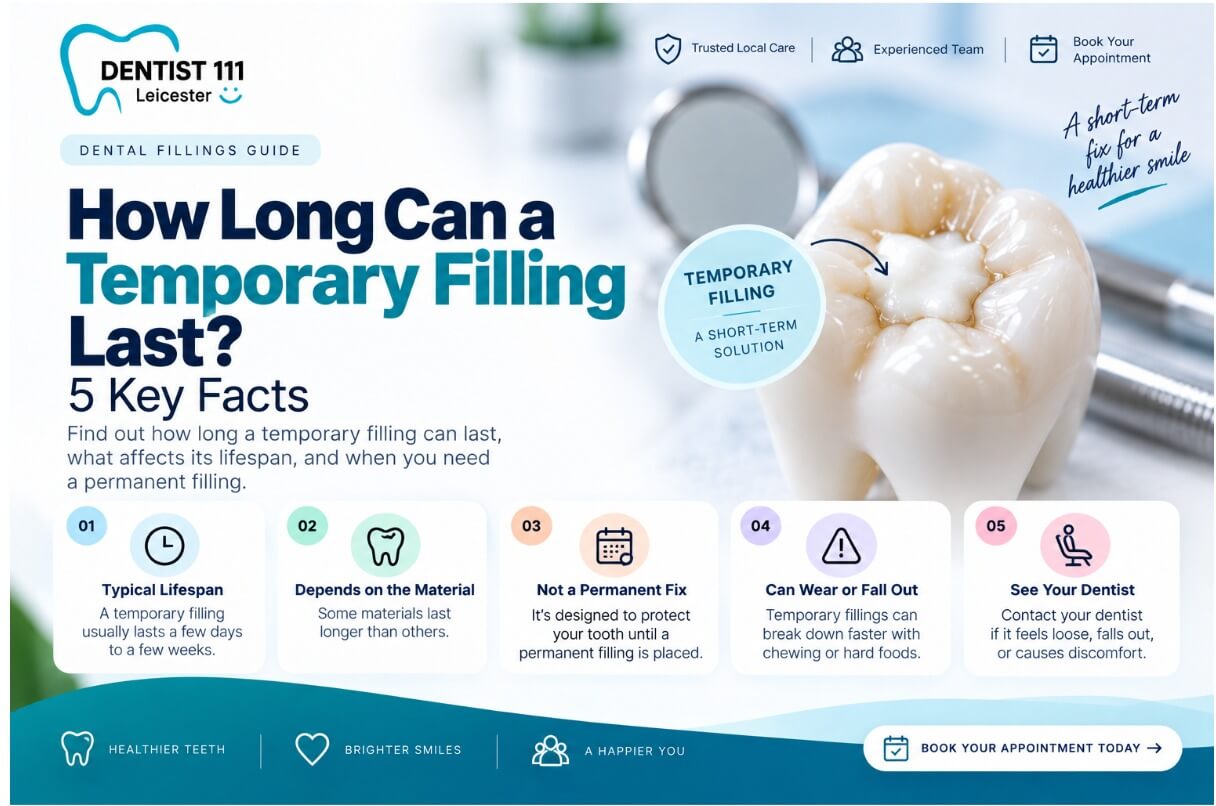
A temporary filling commonly lasts several weeks, although some can remain intact for up to about 3 months, depending on the material, tooth location, chewing forces and reason for treatment. Bupa notes that temporary fillings can last up to 3 months but are generally replaced sooner.
The duration can vary from one tooth and treatment to another. When a temporary filling is placed between root canal appointments, its role is to seal the tooth between treatment stages and limit contamination until the next appointment. Research shows that temporary filling materials differ in their sealing properties, so there is no single lifespan that applies to every material or clinical situation.
For this reason, the temporary filling's lifespan is linked to the planned treatment timeline, rather than being treated as a long-term restoration. If it becomes cracked, loose, worn or falls out before the planned follow-up, the tooth may require earlier assessment.
What Affects the Lifespan of a Temporary Filling?
Several factors can affect how long a temporary filling remains intact, including the material used, the tooth’s location, chewing forces, the amount of tooth structure remaining and the planned treatment timeline. Because temporary filling materials have different sealing and mechanical properties, their durability can vary between clinical situations.
Which Temporary Filling Material Is Used?
Temporary fillings are made from different materials, including zinc oxide-based materials, zinc oxide–eugenol materials, calcium sulphate-based materials and glass-ionomer cements. These materials do not have identical sealing properties, particularly under laboratory testing conditions.
Where Is the Temporary Filling Located?
The position of the tooth influences the mechanical demands placed on the temporary filling. A restoration exposed to substantial chewing forces may experience more mechanical stress than one in a less heavily loaded position. The tooth’s location is therefore considered alongside the filling material and the amount of remaining tooth structure.
How Much Tooth Structure Remains?
The amount of remaining tooth structure also affects how the temporary restoration functions. A filling placed in a tooth with substantial structural loss has different mechanical demands from one used to seal a smaller access cavity. The condition of the tooth therefore remains an important consideration alongside the temporary material.
How Does the Treatment Timeline Affect Its Lifespan?
A temporary filling is placed for a specific treatment purpose, such as sealing a tooth between root canal appointments or protecting it until definitive treatment is completed. Its intended duration therefore depends partly on the stage of treatment and the planned follow-up. The NHS states that a temporary filling may be used between root canal appointments before the permanent restoration is placed.
Why Is a Temporary Filling Used?
A temporary filling is used to seal and protect a tooth until the next stage of dental treatment is completed. Its purpose depends on the condition of the tooth and the treatment being carried out.
Between Root Canal Appointments
A temporary filling can seal the access cavity during staged root canal treatment, helping protect the treated tooth while further treatment is pending. The NHS confirms that a temporary filling may be placed between appointments before the permanent restoration is completed.
For patients undergoing this treatment, the temporary restoration forms part of a staged process rather than the final restoration.
Before a Permanent Restoration
A temporary filling can protect a prepared or weakened tooth until the definitive restoration is placed. It provides short-term coverage rather than serving as the final restoration. Once this temporary stage is complete, treatment may progress to a permanentdental filling where clinically appropriate.
The type of definitive restoration depends on the condition of the tooth, the amount of remaining tooth structure and the treatment plan established by the dentist.
After Emergency Dental Treatment
A temporary filling can provide short-term protection when definitive treatment cannot be completed immediately. The Oral Health Foundation states that temporary fillings can protect the inside of the tooth, reduce sensitivity and seal the tooth until permanent treatment is carried out.
What Are the Signs a Temporary Filling Is Wearing Down?
A temporary filling may be wearing down when the material becomes visibly damaged, loose, worn or partially missing. New pain or sensitivity can also require assessment, but symptoms alone do not prove that the filling has failed.
Visible Cracking or Wear
Cracks, chips, dents or noticeable loss of material can indicate that the temporary restoration has changed. The significance depends on the extent of the damage and the condition of the tooth underneath it.
Part of the Filling Becomes Loose or Missing
A temporary filling can loosen, chip or fall out before the planned follow-up appointment. Because its function includes sealing the tooth, loss of material can require dental assessment.
New Pain or Sensitivity
New or increasing pain or sensitivity warrants dental assessment, particularly when it occurs alongside visible damage or loss of the temporary filling. Symptoms can have several causes, so they should not automatically be attributed to filling failure.
When Should a Temporary Filling Be Replaced?
A temporary filling should be replaced according to the planned treatment timeline or sooner if it becomes damaged, loose, worn or associated with new symptoms. Temporary restorations are designed for short-term protection rather than indefinite use.
If the filling remains intact but the planned treatment has not yet been completed, the dentist can assess whether it is still providing an adequate seal. The decision depends on the condition of the filling, the tooth underneath it and the reason the temporary restoration was placed.
A temporary filling that has fallen out, developed a significant crack or is accompanied by increasing pain should be assessed rather than simply left until a routine appointment. This is particularly important when the filling was placed between stages of root canal treatment, because maintaining a seal helps protect the treated tooth between appointments.
What Happens If a Temporary Filling Is Left in Too Long?
A temporary filling that remains beyond its planned treatment period may wear down, become damaged or lose its seal. Temporary fillings are intended as short-term restorations rather than permanent replacements.
As the material changes or breaks down, the tooth may become less effectively sealed. The performance of temporary filling materials varies according to the material and clinical conditions, and research has identified differences in their sealing ability.
If a planned follow-up has been delayed, the dentist can assess the condition of the temporary filling, the underlying tooth and whether the existing seal remains adequate. The appropriate timeframe therefore depends on the individual treatment plan rather than a universal maximum duration.
Final FAQ
Can a Temporary Filling Last 3 Months?
Yes, some temporary fillings can remain in place for around 3 months, but this is not a universal lifespan. Bupa states that a temporary filling can last up to 3 months, although dentists generally replace it sooner. The actual duration depends on the material, the tooth and the treatment plan.
How Long Does a Temporary Filling Last After a Root Canal?
A temporary filling after root canal treatment usually remains in place until the next stage of treatment. It seals the access cavity while the root canal treatment is being completed. The Oral Health Foundation explains that a temporary filling is placed after the first stage and removed when the tooth is ready for its permanent restoration.
What Happens If a Temporary Filling Wears Down?
A temporary filling can gradually wear, crack or lose material because it is designed for short-term use. Significant damage or new symptoms around the tooth may indicate that the restoration needs assessment and possible replacement.
Can a Temporary Filling Fall Out?
Yes, a temporary filling can loosen or fall out before the planned follow-up appointment. Temporary materials are generally less durable than permanent restorations. If the filling is completely lost, contacting the dental practice promptly allows the tooth to be assessed and resealed if necessary.
Why Does a Temporary Filling Not Last as Long as a Permanent Filling?
Temporary fillings use materials intended for short-term protection rather than long-term resistance to normal chewing forces. They seal and protect the tooth while the planned definitive treatment is completed, after which the temporary restoration can be replaced with the appropriate permanent restoration.